

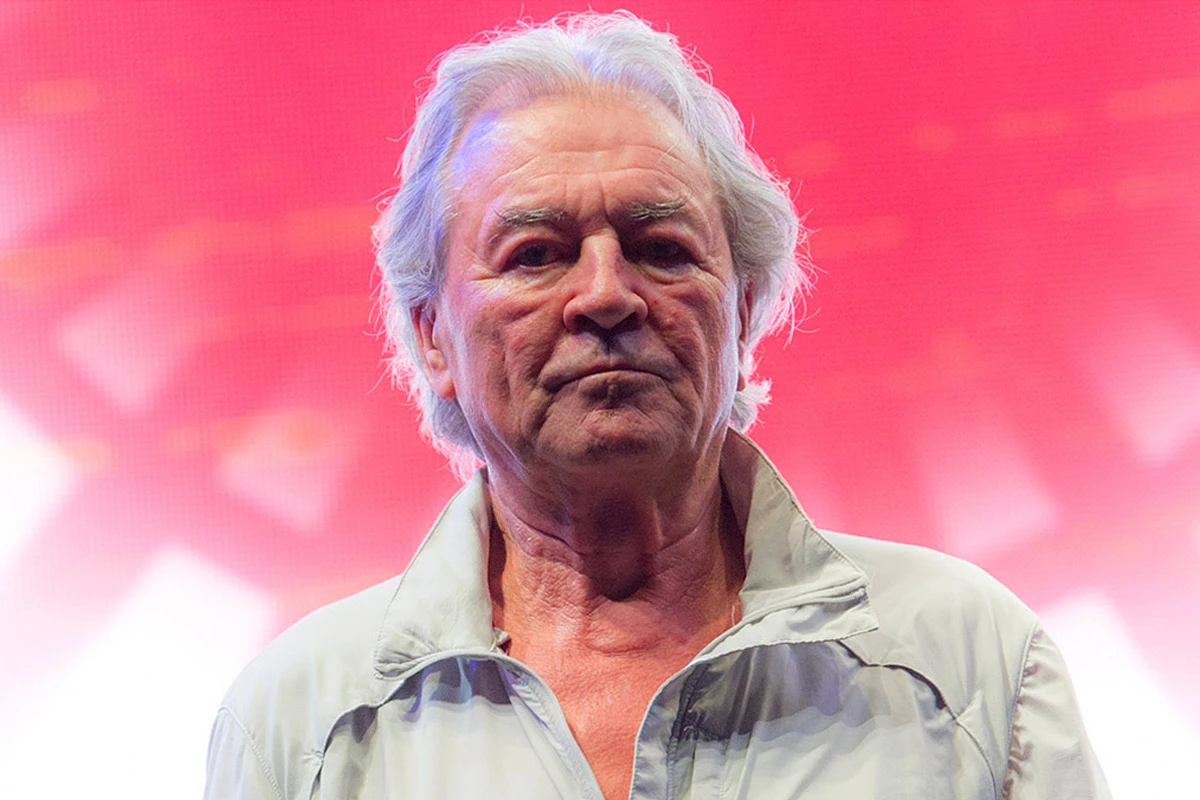
Ian Gillan recently opened up about his initial departure from Deep Purple, offering a candid and personal account of the tensions that led to the band’s split. He shared these reflections in an interview on the Rockonteurs podcast.

Gillan explained that the breakdown was far more nuanced than previously understood, admitting that he was as much to blame as anyone — perhaps more so. He described how the band’s tight-knit dynamic gradually eroded as personal relationships and outside influences began pulling the members apart.
“You start off and there’s like five guys in a van, and with your gear in the back, and then you expand a bit, and you buy a little truck to put your gear in, and you get two roadies, and things expand,” Gillan said. “But you’re still a unit, and you’re still twinning in rooms. I mean, I was Ritchie [Blackmore’s] roommate for a long time. We’d go on holiday together. We were very much five guys.”
He then reflected on how that unity began to fracture over time.
“And then you get to a certain stage, and all of a sudden, your party’s expanded by personal relationships, and then the outside influences don’t gel quite as well as the guys do,” he continued. “And so they’re drawn a little bit apart, and all of a sudden, one of the guys in the band is not staying in the same hotel, because, see, these people don’t quite get on together, and they don’t want to speak, and all that sort of thing. And that’s the beginning of problems.”
Gillan was direct in accepting personal responsibility, while also pointing to a creative divergence with guitarist Ritchie Blackmore as a key factor.
“I was as much to blame as anyone, probably more than anyone,” he said. “One of the key factors was the slight shift in the difference of the mentality of the band. Ritchie, I think, was going towards what became Rainbow in terms of song construction. I felt that was pretty much a lot of what was happening, and I felt a lot of the excitement and craziness was going a little bit.”
Gillan also spoke about the band’s eventual reunion, noting that the members had all changed by the time they came back together.
“When we got back together, we were different people. We’d all experienced a bit of outside life. We all had families,” he said. “It was great. We sat down, and we did it secretly, because if it wasn’t going to work, we didn’t want to make a big deal out of it. But we found a private place in Vermont, and we sat in the basement, and gradually a little jam started. Everyone’s sitting around quietly, and I could see the smiles on faces picking up back in the groove. It was just like being at Hanwell in 1969. It was fantastic.”
The interview offers a rare and reflective look at one of rock’s most storied band breakups, told in Gillan’s own words.
Gillan’s recent reflections shed new light on the emotional and interpersonal dimensions of the split. The historical record adds important context to just how abrupt and painful that departure truly was.
Gillan formally submitted his resignation letter to the band’s management while the group was in Dayton, Ohio. His exit took effect on June 30, 1973. His final performance with Deep Purple came the night before, on June 29, 1973, in Osaka, Japan. When it was over, not a single word was said to him. He simply walked away, later describing the atmosphere as “horrible” and noting that he felt he was no longer regarded as a member of the band the moment he stepped offstage.
The split was driven by a combination of factors: the relentless exhaustion of a punishing touring schedule, the creative friction with Blackmore, and the very “outside influences” Gillan described in the podcast. Blackmore’s musical instincts were pulling him toward the more structured, melodic approach that would soon define Rainbow. Gillan, meanwhile, was determined to hold onto the raw energy and unpredictability that had made Deep Purple one of the most electrifying live acts in rock. Those two visions had become increasingly incompatible.
After leaving the band, Gillan stepped away from the music industry entirely for a period, pursuing business ventures before eventually returning to recording. He later had a brief stint with Black Sabbath before announcing his departure from that band on March 10, 1984. That move paved the way for his return to Deep Purple. The classic Mark II lineup reunited in April 1984, with rehearsals taking place privately in Stowe, Vermont, exactly as Gillan described. The sessions led to the album Perfect Strangers and a triumphant world tour that reaffirmed the band’s enduring power.
The reunion did not mark the end of the tensions between Gillan and Blackmore. By 1989, their differing views on touring and musical direction had resurfaced. Matters came to a head when Blackmore excluded Gillan from a rehearsal session, prompting another departure. It was a reminder that the chemistry which made Deep Purple so explosive was always a double-edged sword — the same intensity that fueled their greatest music was never far from tearing them apart.