



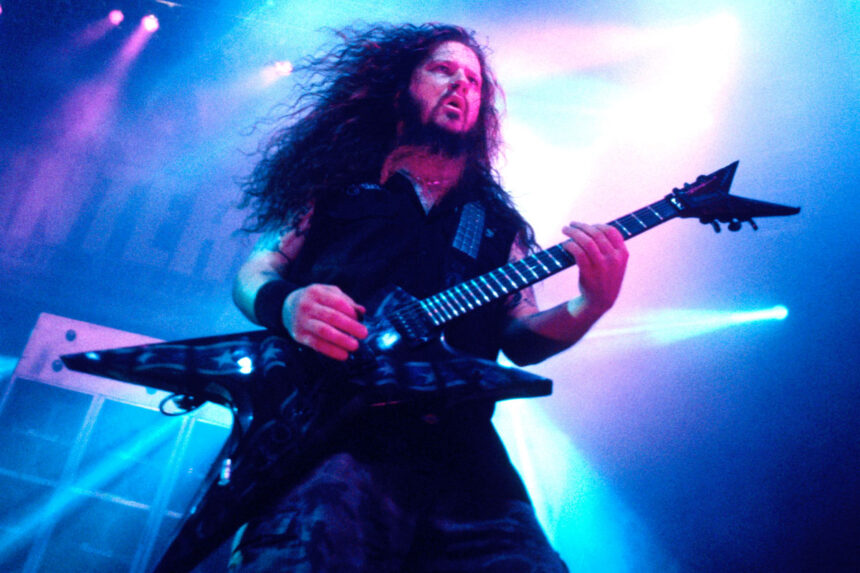
The Trust of Darrell “Dimebag” Abbott has issued a formal press release responding to a recent court ruling in its ongoing legal battle against Dean Guitars, as reported by Instagram. The Trust had sued Armadillo Distribution Enterprises, the parent company of Dean Guitars, for breach of contract. It alleged the company failed to honor key terms of Darrell Abbott’s endorsement agreement.

The press release outlined the Trust’s disagreement with the court’s summary judgment ruling and pointed to specific contractual language it believes supports its position.
“The Trust of Darrell ‘Dimebag’ Abbott has issued the following statement regarding the recent summary judgment ruling by a court in Tampa Florida, in the matter involving the Trust and Armadillo Enterprises (d/b/a) Dean Guitars, and its affiliate Concordia Investment Partners, LLC,” the statement read.
“The Trust respectfully disagrees with the Court’s ruling and believes the decision conflicts with the clear language contained in the agreement Darrell Abbott signed with Dean Guitars in 2004. Specifically, the agreement states: ‘The Company [Dean Guitars/Armadillo Enterprises] shall acquire no rights in the tradenames or designs “Stealth Guitar” or “Razorback Guitar” by virtue of this Agreement, and upon termination of this Agreement shall cease the production of Stealth and Razorback style guitars.'”
“To the Trust, this language demonstrates Darrell Abbott’s clear understanding and intent that ownership and control of the Stealth and Razorback guitar designs would remain with him and would not transfer to Dean Guitars under the agreement.”
The Trust also referenced a Non-Disclosure Agreement signed just two months before the 2004 deal. In it, Dean Guitars CEO Elliott Rubinson acknowledged that the Razorback and Stealth designs were created by Darrell Abbott himself.
“The Trust further points to a Non-Disclosure Agreement executed just two months prior to the 2004 agreement, in which Dean Guitars CEO Elliott Rubinson acknowledged that the Razorback and Stealth guitar designs, along with the associated headstock designs, were created by Darrell Abbott,” the statement continued. “The agreement describes the design Darrell disclosed as: ‘The design constitutes a specific body shape of a guitar and specific headstock shapes that were designed by “Dime,” known as the “Razorback,” a slightly modified “Stealth” guitar, which is also a design of “Dime’s,” and the “Razorback Headstocks 1 and 2,” and are to be used in creating his own signature line of guitars.'”
Rita Haney, Darrell’s long-time partner and representative of the Trust, also issued a pointed statement reinforcing the Trust’s position.
“The Agreement Darrell signed in 2004 stated Dean Guitars shall acquire ‘NO’ rights in the designs Stealth or Razorback Guitar, and…No means ‘None.’ It’s the ultimate negative: it means ‘not any,’ or ‘not at all,'” Haney said. “Darrell would never have signed away ownership of his designs, and the documents clearly support that. He had Dean Guitars sign an NDA to even look at his Razorback Guitar. His Stealth guitar was previously sold during his relationship with Washburn. When that relationship ended, Darrell retained his designs and expected the same arrangement to be upheld by Dean Guitars.”
“Dean Guitars did not make or sell a single Razorback nor Stealth before their formal relationship with Darrell,” she continued. “They never used the shapes without Darrell’s endorsement and in no way should be allowed to make these guitars after the relationship was terminated.”
“We believe this company has repeatedly misrepresented the facts, and we continue to fight for the return of Darrell’s guitar designs as well as their unauthorized use of Darrell’s name, likeness, and intellectual property.”
The Trust concluded its statement by framing the case as part of a wider issue affecting artists and creators.
“This case represents a broader issue faced by many artists and creators — the protection of their intellectual property and legacy against greedy corporate interests with greater financial resources,” the statement read. “We remain committed to protecting Darrell’s legacy and ensuring that one of the most influential guitarists in music history receives the respect and legal protections he deserves.”
The Trust has indicated it intends to continue pursuing the case, with further legal developments expected to follow.
The Trust’s defiant response comes after what has proven to be a significant legal setback in a case that has drawn widespread attention from both the music community and intellectual property advocates. The ruling represents a major development in a dispute that stretches back years. It touches on fundamental questions about artist rights and corporate accountability in the music industry.
As Metal Injection reported, the Florida court ruled in favor of Dean Guitars’ parent company, Armadillo Enterprises, on 11 out of 13 counts brought forward in the lawsuit. The decision represents a sweeping victory for the guitar manufacturer on the majority of the claims. The Trust’s remaining two unresolved counts, however, suggest the legal battle may not yet be fully concluded.
The scope of the ruling underscores just how complex and wide-ranging the dispute has become. The case encompasses not only the ownership of the iconic Razorback and Stealth guitar body shapes, but also broader allegations involving the unauthorized use of Darrell Abbott’s name, likeness, and intellectual property. The Trust has consistently argued that these issues go beyond a simple contractual disagreement.
The outcome has reignited debate over how the music and entertainment industries handle the intellectual property of deceased artists. The Trust’s framing of the case as a fight against “greedy corporate interests with greater financial resources” resonates with a growing number of artists and estates who have found themselves in similar battles. They are often at a financial disadvantage against well-resourced corporations.
Despite the court’s ruling largely favoring Dean Guitars, the Trust has made clear it is not prepared to accept the decision as final. The Trust has expressed its intent to appeal and continue fighting for the return of Darrell’s designs. The legal saga surrounding one of heavy metal’s most beloved guitarists appears far from over. The case will likely continue to serve as a landmark reference point in ongoing conversations about artist rights, legacy protection, and the limits of corporate ownership over creative works.