






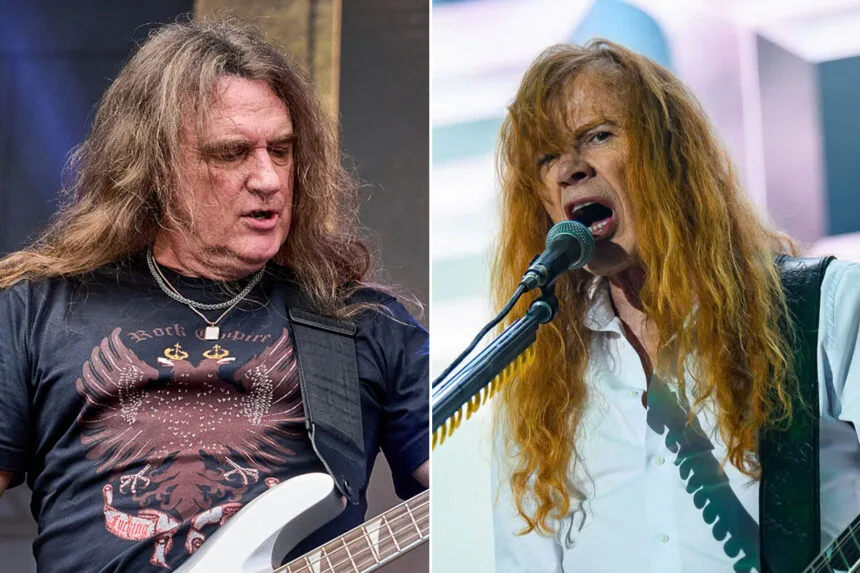
Former Megadeth bassist David Ellefson reflected on the making of the band’s 2011 album “13,” revealing that he willingly stepped back and gave all the songwriting credits and financial claims to frontman Dave Mustaine, posted on RockStarStunts Podcast.

Ellefson explained how he supported Mustaine during the album’s creation by removing himself from the financial and creative claims. His goal was simple: to let Mustaine lead without interference from the rest of the band.
“I knew Megadeth was gonna be a big band when we started it, and it was not, it was gonna be one of these 10-year overnight success kind of things, right?” Ellefson said. “But it was never about the money. Okay, one day there will probably be a good payoff and that’ll be nice, but that was never the goal, you know?”
He continued by describing his direct conversation with Mustaine about the album. “So even coming, now here we are, 2010, we’re now making a new album in 2011. The ’13’ album. And I just said, ‘Yeah, let’s, let’s, you write the songs. You can have the money, you can have the credit, you can, you can… then that way we’re not in your way. You know what I mean? You just know that we’re over here supporting you. You write the tracks, I’ll come in, play bass.'”
According to Ellefson, this arrangement made the recording process one of the best experiences of his career with Megadeth. “And I did, that was one of the most fun records I ever did with Megadeth. I think I came in and with Johnny K, the producer, spent about maybe five days in the studio. And probably only about three of those days actually playing the bass. And it was fun, it was easy…”
Ellefson’s willingness to step back during the recording of “13” ultimately created one of the most enjoyable album sessions in his time with the band.
Ellefson had returned to Megadeth in 2010 after years away, and “13” marked his first studio album with the band since 2001’s “The World Needs a Hero.” The album was released in Japan on October 27, 2011, and worldwide on November 1, 2011. Recording took place in late spring 2011 at Megadeth’s Vic’s Garage studio in California.
Producer Johnny K was brought in for the project because Andy Sneap, who had worked on Megadeth’s previous two albums, was unavailable. Johnny K had built his reputation working with bands like Staind and Disturbed. The album combined newly written material with older songs that the band had composed years earlier but never recorded before.
“13” debuted at number 11 on the Billboard 200 chart and sold 42,000 copies in its first week. The band released three singles from the album: “Sudden Death,” “Public Enemy No. 1,” and “Whose Life (Is It Anyways?)?” All three tracks received Grammy Award nominations, bringing significant recognition to the record.


