






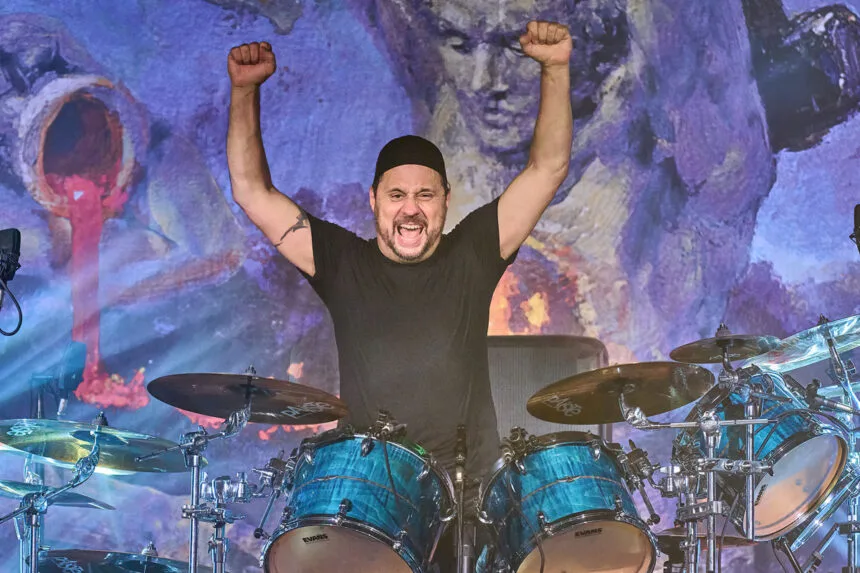
Former Slayer drummer Dave Lombardo discussed the 40th anniversary of the band’s classic album “Reign In Blood” and explained that the record’s success did not come overnight, told This Day In Metal.

Lombardo spoke about how the album built its legacy over time, rather than achieving immediate recognition. He described the band’s growing influence through the late 1980s and how they dealt with mixed reviews when the record first came out.
“Well, I think maybe it was around when our career just started moving up,” Lombardo said. “People were really interested. They were coming to the shows. It had to have been — obviously the album was released [in 1986], so ’87, ’88, and then we released ‘South Of Heaven’. It was an ongoing process. It wasn’t from here to here and overnight. I think legacy bands and legendary records and stuff like that, it takes time to work on those. It takes time to grasp or to achieve.”
“When other bands start imitating you, you start realizing, ‘Wow, we’re really influencing a lot of fans.’ When they hand you a demo tape and you decide to go to the back of the bus and listen to it, and it sounds exactly [like you]. Imitation is the greatest form of flattery, but it was obvious. And then, as time goes on and, the shows you play. For example, our hometown, we played Los Angeles, the Hollywood Palladium. And there’s a riot outside.”
He continued with details about one particular show. “They oversold the show. They got a riot squad. They’re all in line getting ready with their billy clubs and ready to go in and start cracking skulls. And it’s, like, ‘Hey, we, we must be doing something right.’ And what’s cool is that you look back and it’s that attitude of, ‘We do what we want. It’s our music. We’re musicians. We’re artists. We do whatever the hell we want. If you like it, welcome aboard. If you’re not [into it now], well, we’ll wait for you.’ Cause eventually people will come around, ’cause it won’t go away.”
Lombardo also reflected on how the band viewed the critical reception at the time. “At the time you’re really not aware [of how influential your music is going to become]. On occasion you go to the grocery store or the newsstand, you pick up a magazine and you see your face in it and you see a review. Sometimes those reviews, they weren’t all great at the time. You guys think, ‘Oh, this is a great album,’ but we got shit for that record a lot of the times. But after a while, obviously, they had to conform.”
Lombardo made these comments while reflecting on the album’s four-decade history. The remarks show how critical opinion on “Reign In Blood” shifted over the years.
“Reign In Blood” came out on October 7, 1986, through Def Jam Recordings and marked Slayer’s first collaboration with record producer Rick Rubin. The album sparked considerable public backlash due to its album art and lyrical content. Conservative commentators accused Slayer of holding Nazi sympathies, particularly over the opening song “Angel Of Death,” which dealt with Josef Mengele and his experimental surgeries at the Auschwitz concentration camp. The band has consistently denied any support for Nazism.
The Hollywood Palladium incident that Lombardo referenced took place on August 12, 1988, when Slayer played alongside Danzig and Junkyard. About 200 people gathered outside the venue after no more seats were available, and the crowd became increasingly rowdy. Roughly 40 officers were sent to disperse the crowd, and one person was seriously injured when thrown through a plate-glass window. The riot cost the band concert dates in Los Angeles County for years afterward.
The critical reassessment of “Reign In Blood” became clear in later years. Rolling Stone magazine ranked the album at number six on its list of the 100 Greatest Metal albums of all time, a far cry from the mixed and often hostile reviews it received upon release. South of Heaven, Slayer’s second album with Rick Rubin, followed on July 5, 1988, continuing the band’s evolution.


