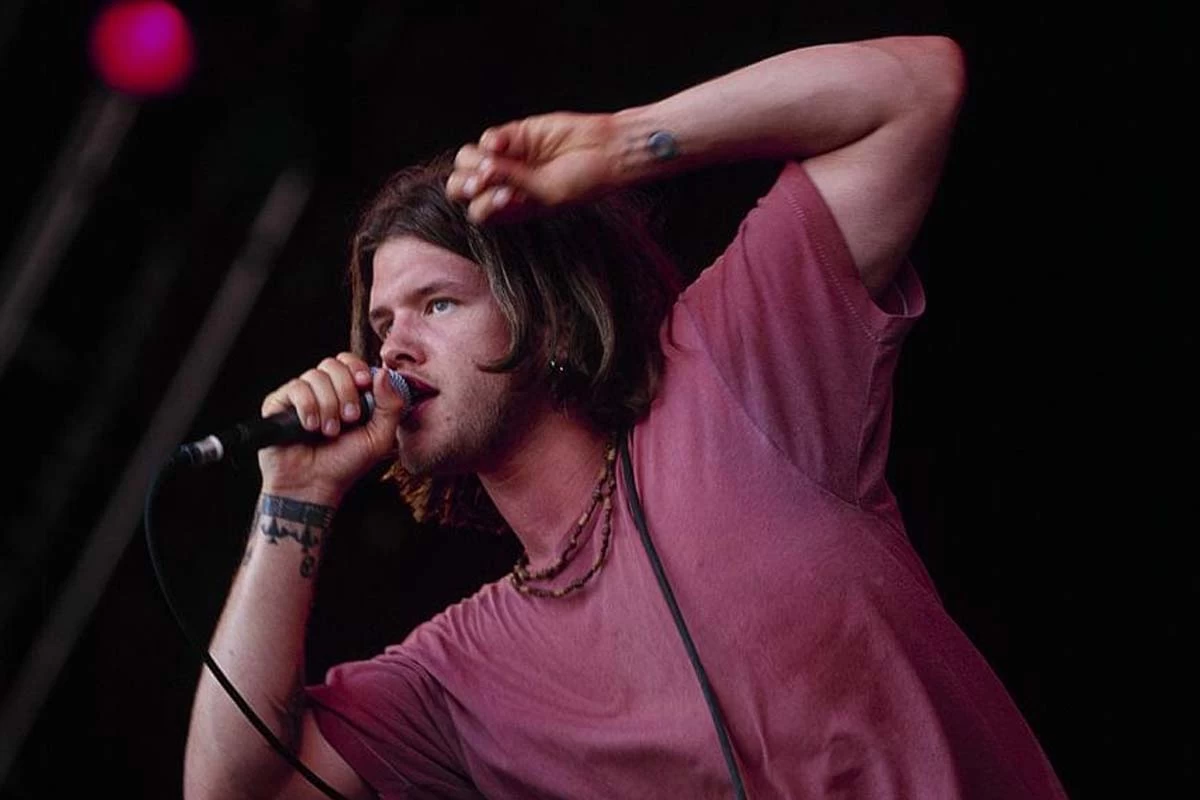

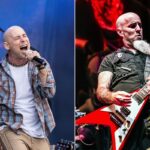


Slipknot frontman Corey Taylor opened up about his spiritual journey and personal struggles in a candid conversation on Mythical Kitchen.

Taylor discussed how his past battles with addiction and nihilism led him toward a deeper sense of belief. He revealed the concept of a higher power he has developed as part of his recovery programme.
“As I’ve gotten older, I realize that a lot of my impetuous behaviours [happened], because I didn’t really have a foundation in believing in something,” Taylor said. “Emotionally, I was pretty nihilistic. You know, as an alcoholic and as an addict, you tend to kind of drive towards extremes.”
He went on to describe the personal spiritual framework he has built. It draws from multiple traditions without aligning with any organised religion.
“I have a higher power in my programme that I recognize,” he continued. “The name is Lord Mother, because it’s a little bit of everything. This is something that I’ve come up with. I don’t really trust a lot of organized religion, however in the programme that I’m in, we are obviously encouraged to realize a higher power that’s greater than us.”
Taylor elaborated on what this concept means to him on a deeper level.
“So to me, Lord Mother is the yin and the yang,” he said. “It’s the alpha and the omega. It’s the ending, the beginning. And it’s everything around us.”
Reflecting on the personal impact of this spiritual shift, Taylor described the experience in vivid terms.
“When you open up to it, it’s like feeling a breeze on the hottest summer day,” he said. “It’s like a glass of iced tea, man. You get that little sweetness, but then your thirst is quenched. It’s beautiful. And it’s taken me time to learn to listen to it. And I’ve never been a religious person. I’ve never been a spiritual person. But letting go of that, of the incredible weight of ego, has helped me listen.”
Taylor also revealed that he performs a personal praying ritual every time he takes the stage. This underscores how central this spiritual practice has become to his life as a performer.
The road to that spiritual clarity was long and marked by some of the darkest moments of his life. Taylor’s relationship with alcohol and substances stretched back years. The consequences were severe enough to force a reckoning that would ultimately reshape who he is.
Taylor has been sober since 2010. That turning point came roughly a month after the death of Slipknot bassist Paul Gray. He has described the early years of sobriety as disorienting. Alcohol had become so embedded in his identity that getting clean meant having to figure out who he was all over again. “The first few years is weird, because you realise quickly how much a part of your personality booze has become,” he said.
The crisis that first pushed him toward sobriety was stark. In 2003, Taylor found himself hanging off a hotel balcony in a moment he has since described as a near-fatal wake-up call. He quit drinking cold turkey at that point. The full and lasting break from alcohol, however, would come years later.
Taylor has also spoken about how sobriety brought unexpected clarity to his craft. He was never truly creative when drunk. His writing, performing, and singing all improved markedly once he came out of the fog of addiction.
For Taylor, recovery has never been purely about abstinence. He has consistently framed it as a broader process of self-examination and repair. It means becoming a better person, rebuilding relationships, and confronting the internal weight that drove him toward extremes. The spiritual framework he now carries onto every stage is, in many ways, the culmination of that work.