

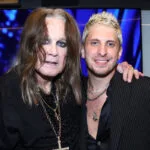



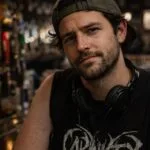

Anthrax and Pantera drummer Charlie Benante recently voiced his support for Smashing Pumpkins frontman Billy Corgan’s theory about the systematic silencing of rock and metal’s influence in media and popular culture. He shared his perspective in an interview with Hot Metal Magazine.

Benante explained his belief that rock music has been deliberately marginalized in mainstream culture. He pointed to specific changes he witnessed in the late 1990s.
“I think, and I will say it overtly, I think that rock has been purposely dialed down in the culture,” Benante said. “Late ’90s. I think the first, and again this gets wizard behind the curtain, right? Somebody’s going to say, ‘Well, how do you know who was the wizard behind the curtain?’ All I know is I saw the gravity shift, okay?”
The drummer described witnessing a dramatic shift at MTV during the late 1990s. The network’s programming priorities changed significantly during this period.
“If you were at MTV, or around MTV in 1997-98, suddenly they decided rock was out, when rock was very, very high up in the thing,” he continued. “And it was replaced by rap. They immediately changed the way… their standards and practices immediately shifted. So now that things that weren’t allowed were suddenly allowed, people were waving guns. Okay, so some people assert that the CIA was involved in all that. Again, above my pay grade. But I saw it happen. I did witness it happen.”
Benante acknowledged the quality of music that emerged from this shift. He maintained his position about the deliberate nature of the change.
“And of course great music came out of it,” he said. “So it’s not like, it’s not a barren wasteland where something was pushed in that replaced something. Qualitative things and great artists came in, but there was this overt shift. I saw it happen. And then now as you pointed out rap seems to be waning in terms of its cultural influence. Pop is completely dominant.”
The drummer highlighted what he sees as a contradiction between rock music’s commercial success and its cultural representation.
“Rock is probably the most dominant ticket-selling thing in the western world, and yet there’s almost no representation of rock in culture,” Benante concluded. “So why do we have that schism? I think they purposely dialed down the ability of rock stars to have a voice in the culture. Or… those who exist within the ecosystem are basically… they know they’ll color between the lines so they don’t have to worry about that.”
Benante’s comments represent a strong endorsement of Corgan’s controversial theory. The drummer provided his own firsthand observations to support the claim that rock music’s decline in mainstream culture was orchestrated rather than organic.
Metal Anarchy reported that Benante has long held this belief and praised Corgan’s eloquence in articulating what he describes as a deliberate scheme. The drummer went further than his previous comments, claiming “there was a coup” by “gatekeepers” who restricted rock’s access compared to saturated genres like country and pop.
Benante provided specific examples of what he considers evidence of this systematic marginalization. Metal Anarchy noted that he blamed Clear Channel’s radio station acquisitions and the demise of Los Angeles’ KNAC station, which was bought by Lieberman Broadcasting, as actions that devastated rock markets nationwide. He also pointed to MTV’s decision to stop playing rock music as a contributing factor that harmed the industry.
The theory that rock music was intentionally silenced has gained traction among several prominent musicians in recent years. The PRP documented that Benante’s backing of Corgan’s theory adds weight to claims that a nefarious scheme was hatched to lessen rock music’s cultural impact during the late 1990s.
The discussion highlights ongoing debates within the rock community about the genre’s place in contemporary culture. It raises questions about whether its reduced mainstream presence is the result of natural evolution or deliberate industry manipulation. While these theories remain controversial and difficult to prove definitively, they reflect genuine concerns among rock musicians about their genre’s cultural visibility despite its continued commercial success in live performances.


