






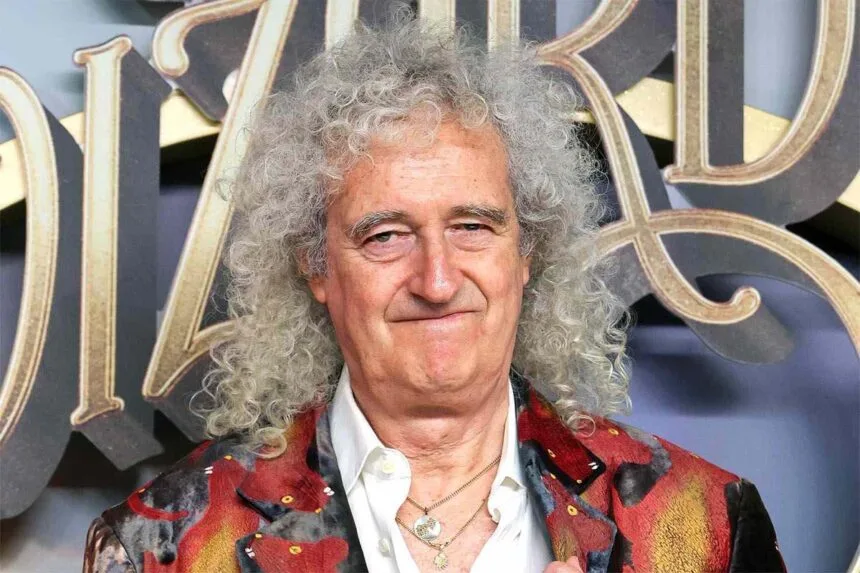
Brian May of Queen has revealed a shift in his stance on artificial intelligence. He is now urging for stronger resistance to its unchecked growth, according to comments shared by Absolute Radio.

May explained that he once viewed A.I. as an inevitable technological shift, comparable to the Industrial Revolution. He has since grown far more concerned about the risks it poses.
“I’ve changed, really. In the beginning, I thought, ‘Well, this is just like the Industrial Revolution, and it’s pointless to even think about it ’cause it’s gonna come, and we can’t do anything about it.'” said Brian May. “I now feel differently. I feel like we have to resist, and we have to limit its scope. We have to control it very, very seriously and very quickly.”
May went on to describe what he sees as the core danger of the technology — the possibility that it could eventually overpower human control.
“A.I. has a lot more issues than that, but, to me, there are inherent dangers in creating an intelligence which is able to possibly eventually control us. It’s a very real threat,” he continued.
He also addressed the nature of how A.I. systems operate, arguing that they only simulate thought rather than genuinely think. He also warned about the growing power these systems could hold.
“The funny thing is they don’t think, these A.I. machines. It looks like they’re thinking, but they’re not really thinking — they are copying, they are stealing from everything. And they can give a very good impression of imitating a human being. But they are not a human being. Unfortunately, they will have a lot of power, though, because they will be able to — well, reverse the control, and it’s already happening. They’re already breaking out. So we’ve got to think very seriously, in my opinion,” he said.
Finally, May acknowledged how difficult it has become to avoid A.I. in everyday life. He noted its presence in tools people use without even intending to.
“It’s hard to eliminate it from your life ’cause it’s there already, as it’s snuck in in various ways. Like if you’re Googling something, you’re gonna get an A.I. overview, even if you didn’t ask for it. So it’s very hard to step away from it completely,” he added.
This is not the first time May has spoken out against the rise of artificial intelligence. His concerns have been building over the past several months, extending well beyond his general anxieties about the technology and into direct action within his own industry.
Earlier this year, May emerged as a vocal figure in the music industry’s pushback against generative A.I. He backed a campaign that frames unauthorized A.I. training on artists’ work as a form of theft. He has argued that the practice threatens to undermine musicians’ ability to earn a living from their own creations, positioning the issue as an existential threat to the profession rather than a distant, abstract concern.
May has also taken his warnings public in striking visual fashion. In August, he used Meta AI to generate a deliberately poor recreation of the cover art for Queen’s 1980 album “The Game,” presenting the flawed result as evidence that the technology is not needed. Alongside the image, he declared that data centers powering A.I. systems should not be built in the UK, tying his cultural concerns to broader infrastructure and environmental debates.
Despite his hardening stance on A.I.’s risks, May has not ruled out every application of advanced technology for Queen’s legacy. He has previously expressed openness to the idea of an ABBA-style avatar show for the band. His willingness to entertain such a project, even as he warns against A.I.’s broader dangers, suggests his resistance is aimed less at digital innovation itself and more at the unchecked, uncontrolled deployment of A.I. systems across society, underscoring just how complicated the debate over artificial intelligence has become for artists navigating both its promise and its threat.


