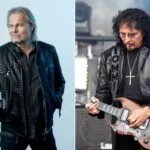



Twisted Sister’s Dee Snider has reacted to a news report about Iron Maiden’s Bruce Dickinson stopping a show to remove a fan who was bullying a woman in the crowd. Snider shared his thoughts on X (formerly Twitter).

Snider expressed his full support for Dickinson’s actions, emphasizing that artists have a duty to protect their audiences. He also recalled a similar incident from his own experience on stage.
“Well done, my friend! We have a responsibility to watch out for our audience,” Snider said. “I once saw a girl being sexually assaulted by a group of guys from the stage. I stopped the show and had her pulled out to safety. F*ck that shit!”
Dickinson halted the Iron Maiden show and had security remove the offending fan. The move reflects a zero-tolerance approach to harassment that more artists are openly embracing. The incident quickly drew attention across the rock community, with Snider’s public backing amplifying the message further.
Snider made clear that the bond between a performer and their audience carries real obligations. He once stopped a Twisted Sister show mid-set after witnessing a sexual assault from the stage — one of the more striking examples of an artist taking direct action to protect a fan in danger.
Artists have long paused performances to address violence or harassment in the crowd, treating audience safety as an extension of their role as performers. What has changed in recent years is the willingness of high-profile musicians to speak openly about these moments and frame them as a professional and moral responsibility.
Snider’s voice carries particular weight in this conversation. Known for his outspoken nature both on and off the stage, he has consistently positioned himself as an advocate for fans. His immediate and unfiltered response to the Dickinson incident is consistent with that long-standing stance.
Together, Dickinson and Snider’s actions send a clear signal: the stage is not a passive vantage point. For artists who take their role seriously, it is also a position of responsibility — one that demands action when the crowd they are performing for is put at risk.